

Ports Modernisation Must Extend Beyond Terminals- Stakeholders Say
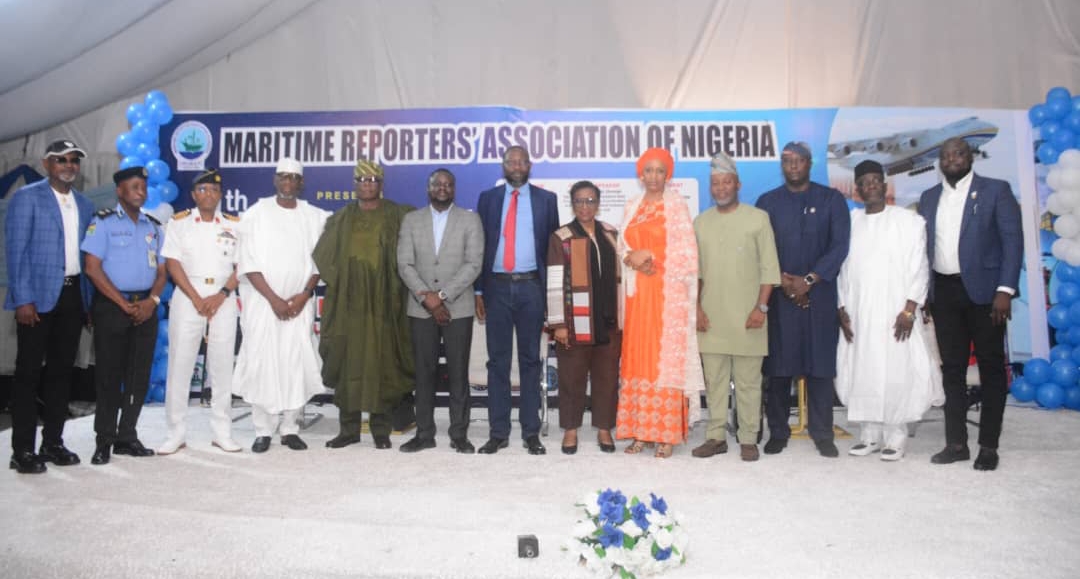
As MARAN President, Onigbinde Stresses Nigeria must Learn From Other African Countries to Improve Competitiveness
Stakeholders at the 4th Maritime Reporters’ Association of Nigeria (MARAN) Annual Maritime Lecture have called for port modernisation that goes beyond terminals and addresses the movement of cargo from the port to its final destination.
The speakers made the call at the lecture, with the theme, “Nigerian Ports Modernisation, Charges and the Competitiveness Question,” held in Lagos on Thursday, 10 September 2026.
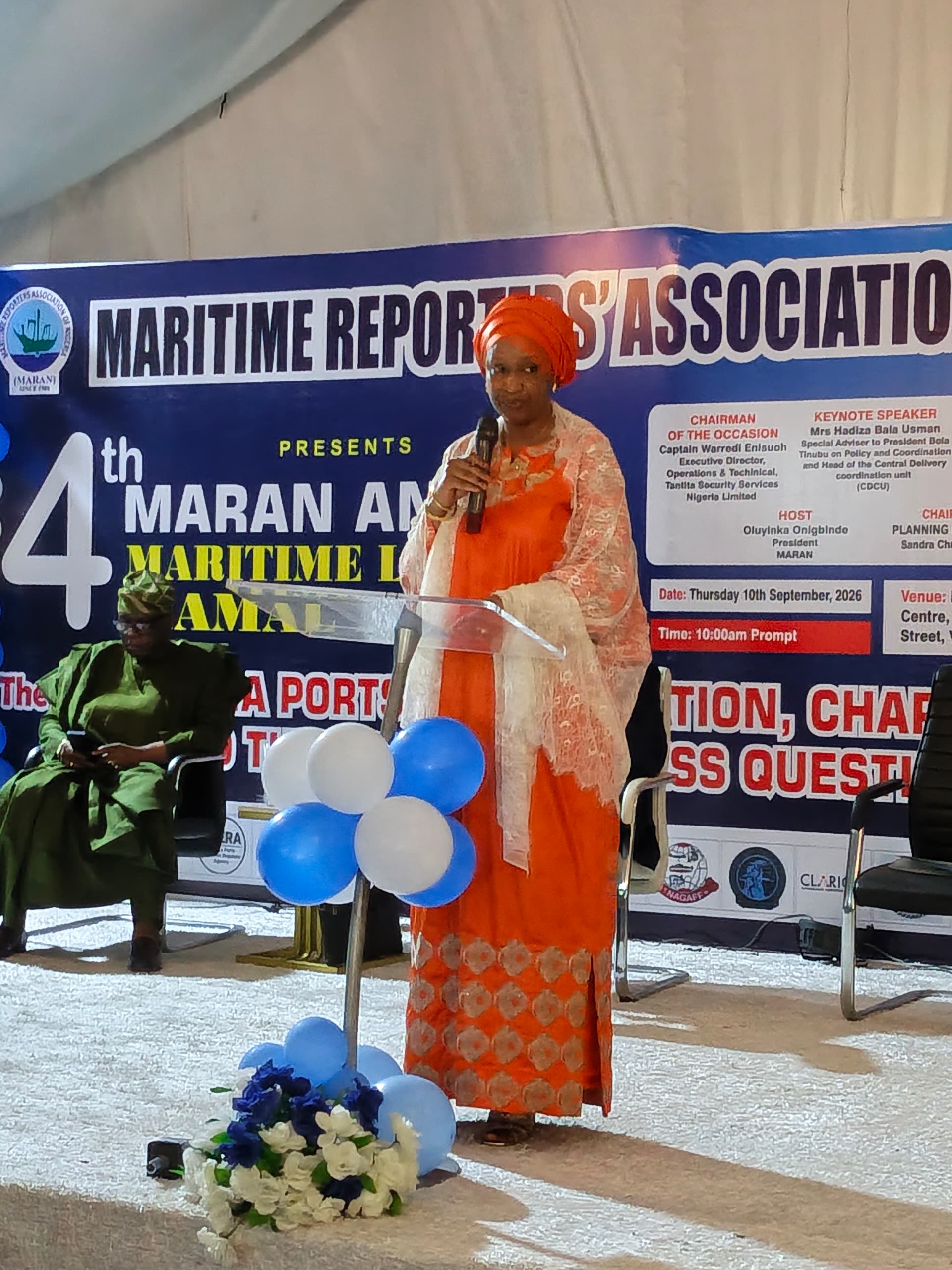
Delivering the keynote address, former Managing Director of the Nigerian Ports Authority (NPA), Hadiza Bala Usman, said port modernisation should not be measured by infrastructure spending alone, but by what the investment does to the cost and time of moving goods.
She said modernisation must cover the entire logistics chain, from the ship and terminal to the hinterland, factory, market and final destination, noting that cranes, channels and berths would not be enough if cargo remained delayed by documentation and evacuation problems.
Hadiza, who is the Special Adviser to the President on Policy and Coordination, & Head, Central Results Delivery Coordination Unit (CRCDU), said the focus should include physical infrastructure, equipment, digitalisation, institutional reform, human capital and commercial modernisation, with the results measured through vessel turnaround, cargo turnaround, truck turnaround, cargo-handling productivity, equipment reliability and total logistics cost.
On port charges, she said the issue should not be considered as a single tariff because the cost of moving cargo also includes terminal and shipping line charges, demurrage, detention, documentation, clearing and other costs.
She called for a tariff regime that is predictable and transparent, with charges linked to service performance and international benchmarks, adding that high cumulative costs could affect Nigeria’s ability to attract cargo and compete with other ports in West Africa.
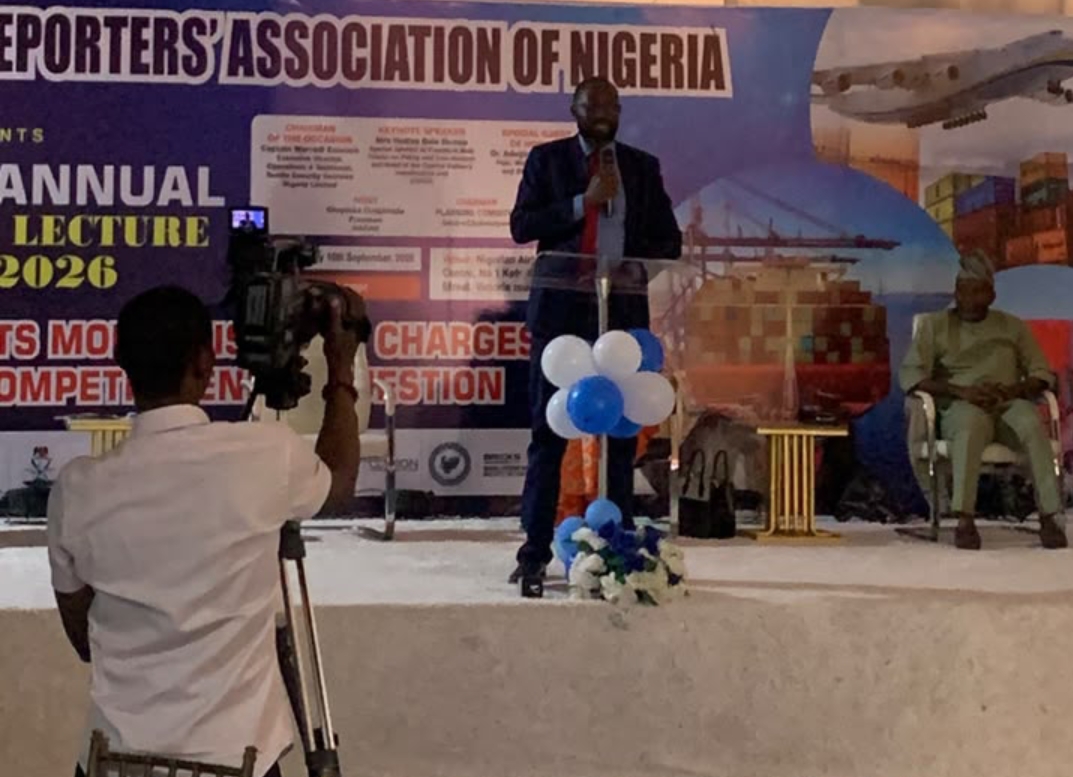
Chairman of the programme, Capt. Warredi Enisouh, said Nigeria’s port modernisation was “all concentrated in the port” and “concentrated in Lagos”, arguing that the country must look beyond what happens inside the port.
“You cannot modernize a port without modernizing your exit point,” Enisouh said, stressing that automation inside Apapa or Tin Can Island would not solve the problem if cargo could not move efficiently after leaving the port.
He also pointed to the number of agencies involved in shipping and cargo clearance, saying that shipping agents have to deal with agencies including the Nigerian Maritime Administration and Safety Agency (NIMASA), Nigeria Customs Service and NPA. He contrasted this with what he described as a one-stop-shop system in Togo, where payments for different services can be made at once.
Enisouh also called for greater use of barges to move cargo to other locations and reduce pressure on roads, while urging Nigeria to look beyond Lagos and develop its other ports. “So as we deliberate over this, let us look at the wider picture,” he said.
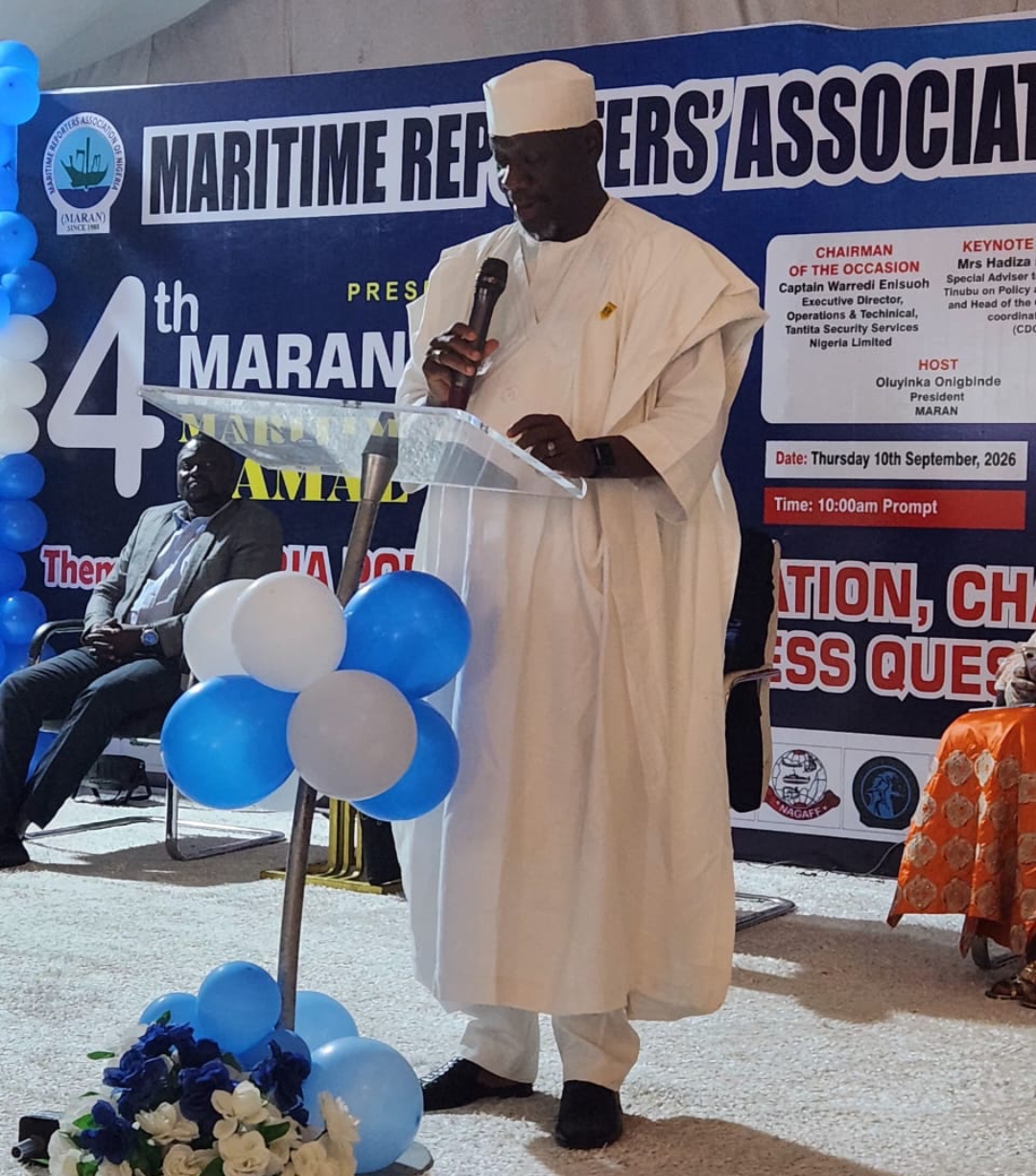
Presenting a paper, National President of the Chartered Institute of Logistics and Transport (CILT), Dr. Boboye Oyeyemi said Nigeria should stop seeing the port as an isolated facility and regard it as part of an integrated national logistics network involving Customs, roads, rail, inland waterways, dry ports, warehouses, industrial clusters and markets.
The ex- Corp Marshall of the Federal Road Safety Corps (FRSC), said port competitiveness is about what happened after a vessel berthed and a container left the terminal, including Customs clearance, cargo evacuation and the movement of goods to businesses and markets.
Related Posts
He said Nigeria must stop viewing ports as isolated facilities and begin treating them as nodes within an integrated national logistics network.
He called for seamless connections among ports, Customs, roads, rail, inland waterways, dry ports, warehouses, industrial clusters and markets, and further highlighted the importance of the CTCN, National Single Window and Port community systems, saying digitisation should create an integrated cargo-flow ecosystem rather than simply put existing data online.
According to him, “The container should have one digital identity and one traceable journey. Competitiveness should not be judged by whether one port’s tariff was high or low, but by the total cost of moving cargo from origin to destination”.
He identified port and terminal charges, Customs-related costs, storage, demurrage, documentation, haulage, security, inventory costs and uncertainty as factors affecting importers and exporters.
He called for transparent and predictable charges, efficient processes and measurable service standards, saying the policy objective should be to reduce total logistics costs.
Oyeyemi also urged Nigeria to embrace multimodal transport, saying the country could not continue to depend overwhelmingly on roads for cargo movement when rail and inland waterways offered opportunities for more efficient evacuation. He said rail should serve high-volume, long-distance cargo, while inland waterways should be used where commercially viable. Dry ports and logistics parks, he added, could bring cargo processing closer to the hinterland.
The CILT president said Nigeria had an opportunity to become a major logistics gateway for West and Central Africa, citing its population, geographical position, maritime assets and access to the African Continental Free Trade Area.
He urged stakeholders to move from terminals to networks, documents to data, dependence to multimodality, and import bias to export competitiveness. Oyeyemi also commended MARAN for sustaining the platform and urged journalists to contribute their quota in helping Nigerians understand why logistics matter to the price of goods, competitiveness of Nigerian businesses, employment, investment, and economic growth”.
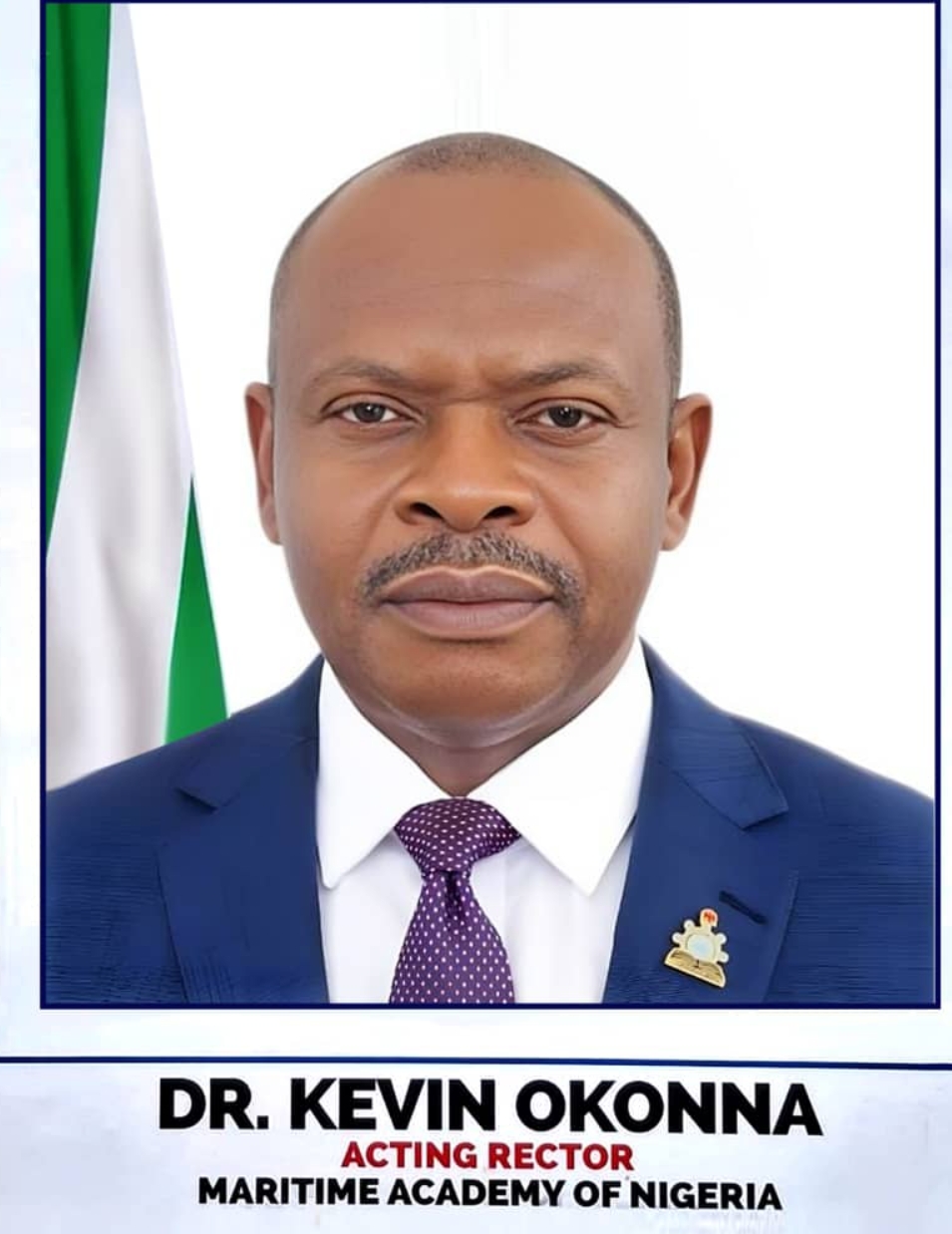
In his goodwill message, the Acting Rector of the Maritime Academy of Nigeria, Dr. Kevin Okonna, said modern port infrastructure would require competent professionals who could operate and maintain it.
Dr. Okonna, who was represented by the University Image Maker, Domo Umoekpe, said the Academy was investing in modern training infrastructure, simulators, practical facilities and partnerships to prepare maritime professionals for the needs of the industry.
The speakers agreed that port modernisation must therefore extend beyond infrastructure inside the port to cargo evacuation, digital processes, charges, human capacity and the wider logistics system if Nigeria is to improve the competitiveness of its ports.
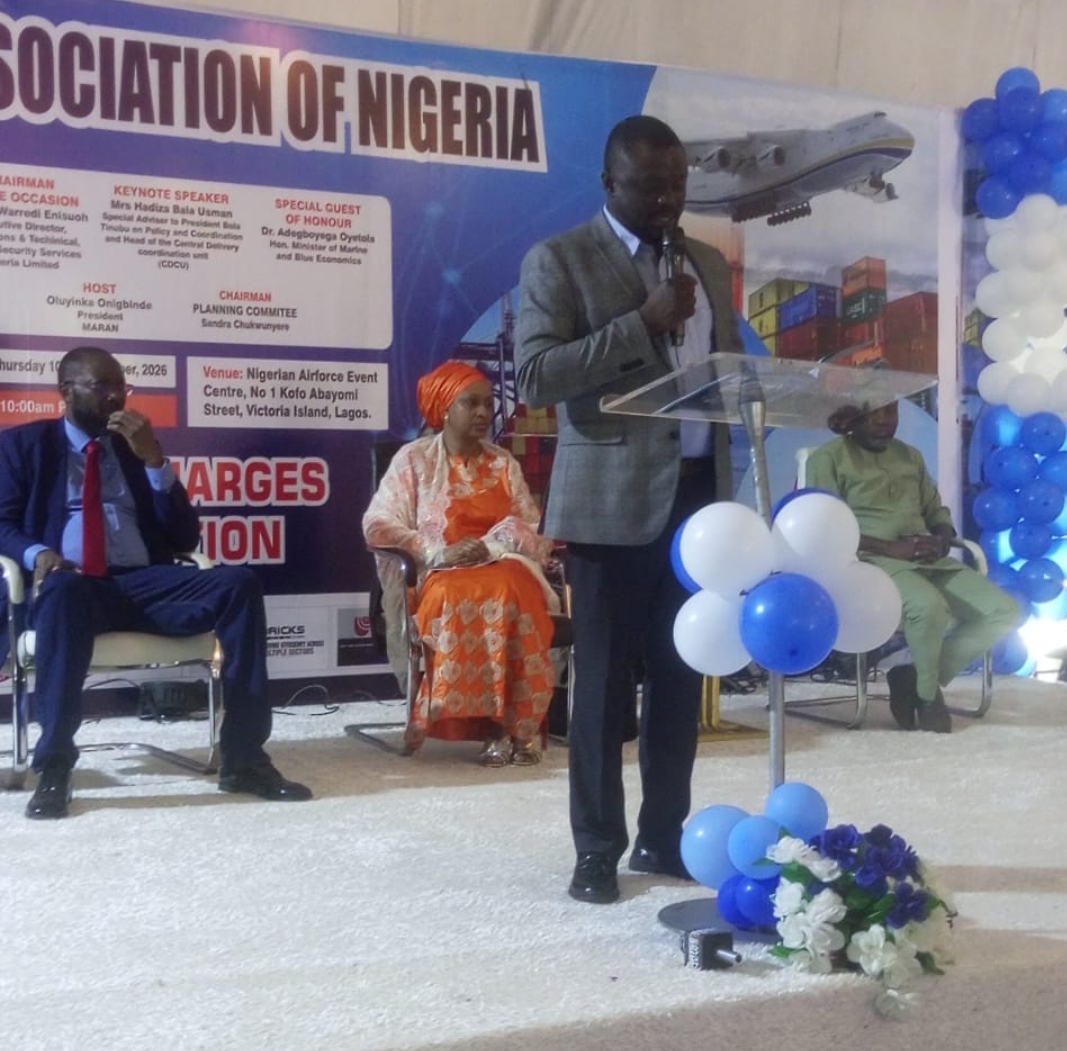
Similarly, MARAN President, Oluyinka Onigbinde stressed that Nigeria must learn frm other African countries to improve competitiveness.
In his welcome address, he observed that Nigeria is currently witnessing renewed efforts to modernise port infrastructure, strengthen regulation, and position the maritime sector as a key driver of economic growth.
However, the country, he emphasised must be measured not only by equipment and technology, but by efficiency, transparency and affordability.
“It should mean reduced delays, predictable procedures, reasonable charges, and improved service delivery. It should mean Nigerian ports can compete favourably with other Ports in Africa and globally”.