

Between Waste Management and Community Well-being: Inside the Environmental Challenges Surrounding LAWMA’s Ikorodu Dumpsite
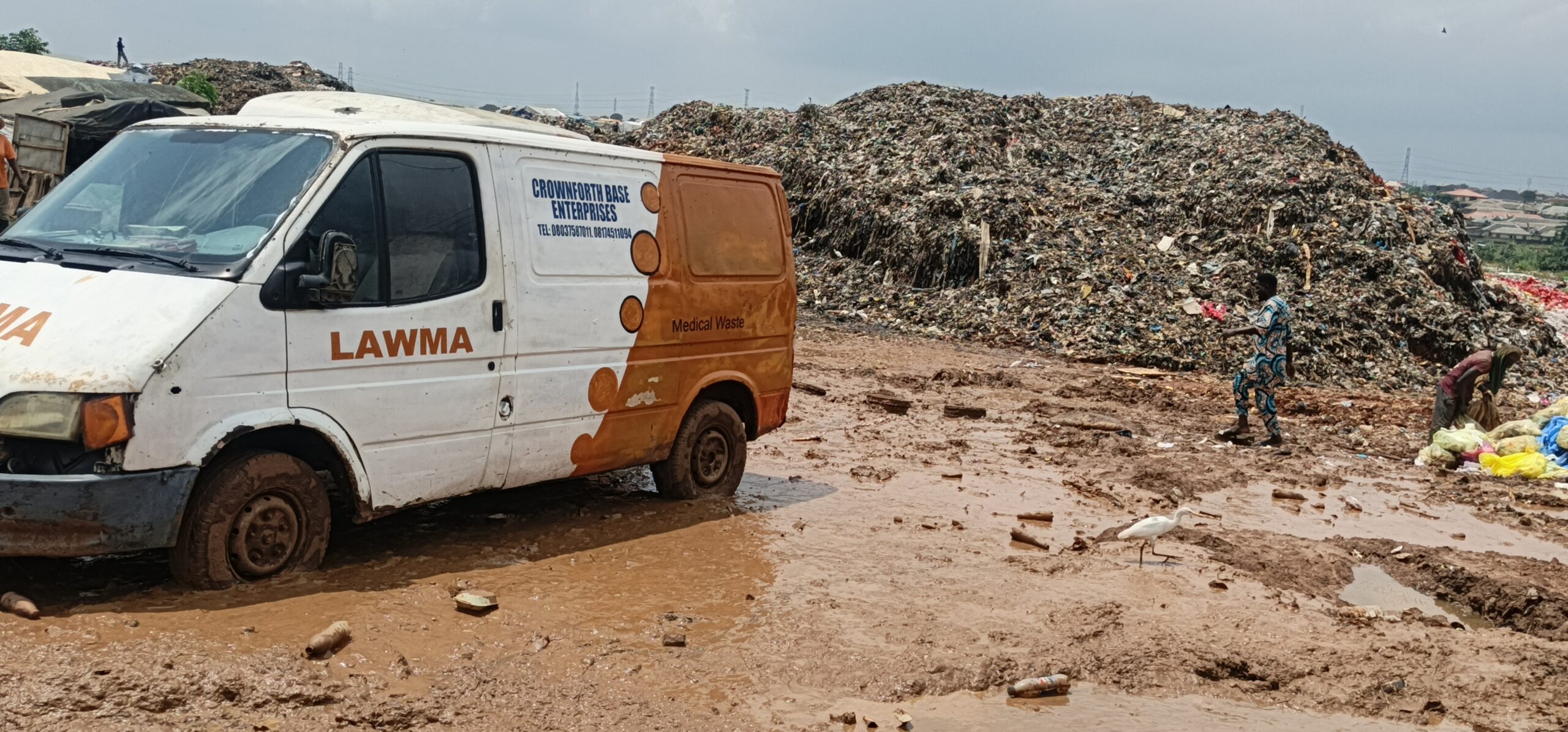
The Lagos Waste Management Authority (LAWMA) Private Sector Participation (PSP) programme has played a vital role in keeping Nigeria’s commercial capital clean by ensuring the efficient collection and disposal of municipal waste across Lagos state. But for residents of Progressive Estate Community in Elepe-Ginti, Ikorodu, living beside a major waste disposal facility has brought environmental and infrastructural challenges that underscore the need to strike a balance between effective waste management and the well-being of host communities.
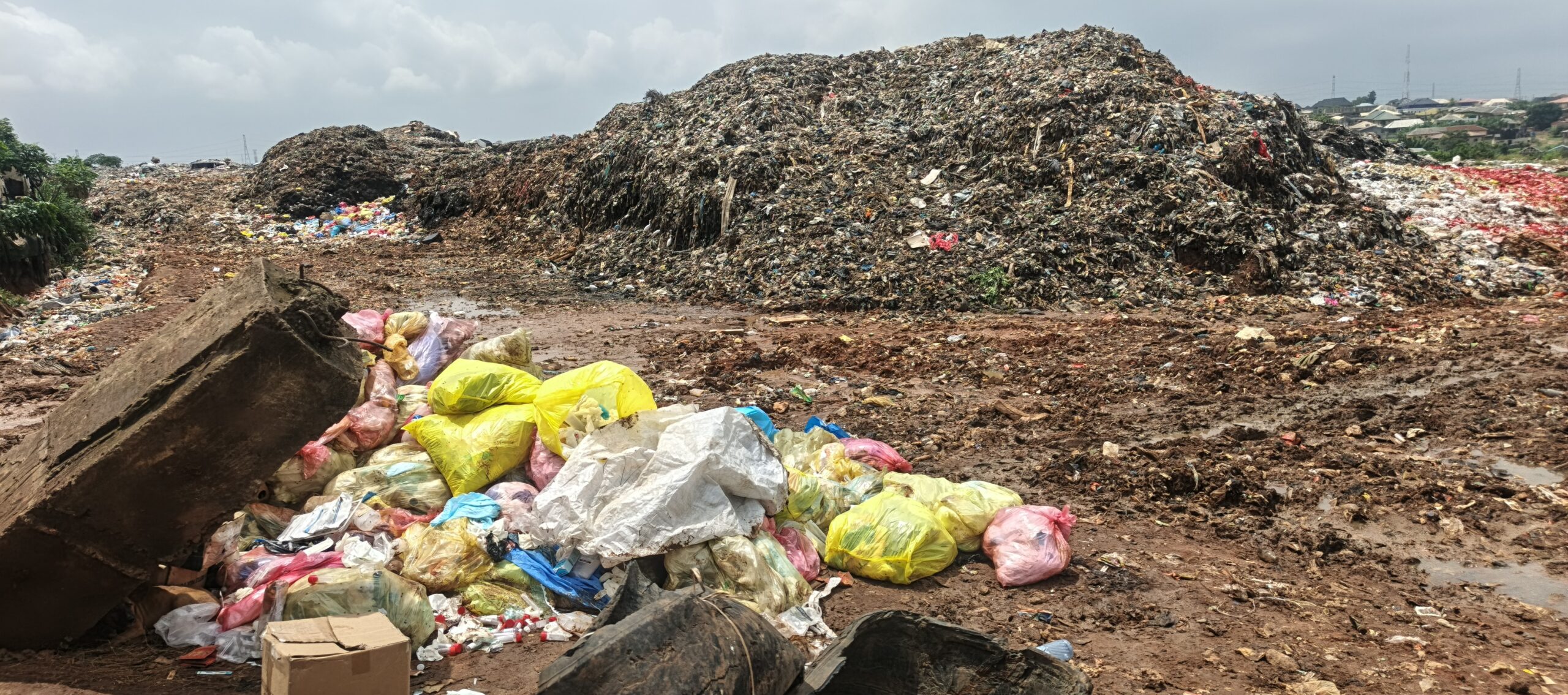
For years, residents have lived with the realities of sharing their neighbourhood with one of Lagos critical waste disposal facilities. While they acknowledge the importance of the dumpsite to the state’s sanitation efforts, they bemoaned the deteriorating roads, smoke, unpleasant odour and other environmental concerns which have prompted repeated appeals for urgent government intervention.
ZAINAB JUNAID writes from Lagos
For thousands of Lagos residents, the sight of refuse collection trucks making their daily rounds is evidence of a waste management system working to keep Africa’s most populous city clean.
Behind that system is the Lagos Waste Management Authority (LAWMA), whose Private Sector Participation (PSP) programme has, for decades, relied on licensed operators to evacuate household and commercial waste across the state.
Yet, while the programme has played a significant role in improving sanitation in Lagos, communities hosting waste disposal facilities have said that they continue to bear the environmental and infrastructural burden that comes with the city’s growing population and increasing waste generation.
One of such communities is UNILAG/ Museum Estate axis of Elepe- Ginti in Ikorodu, particularly the Progressive Estate, where residents are calling for greater attention to the impact of the nearby LAWMA dumpsite on their health, environment and daily lives.
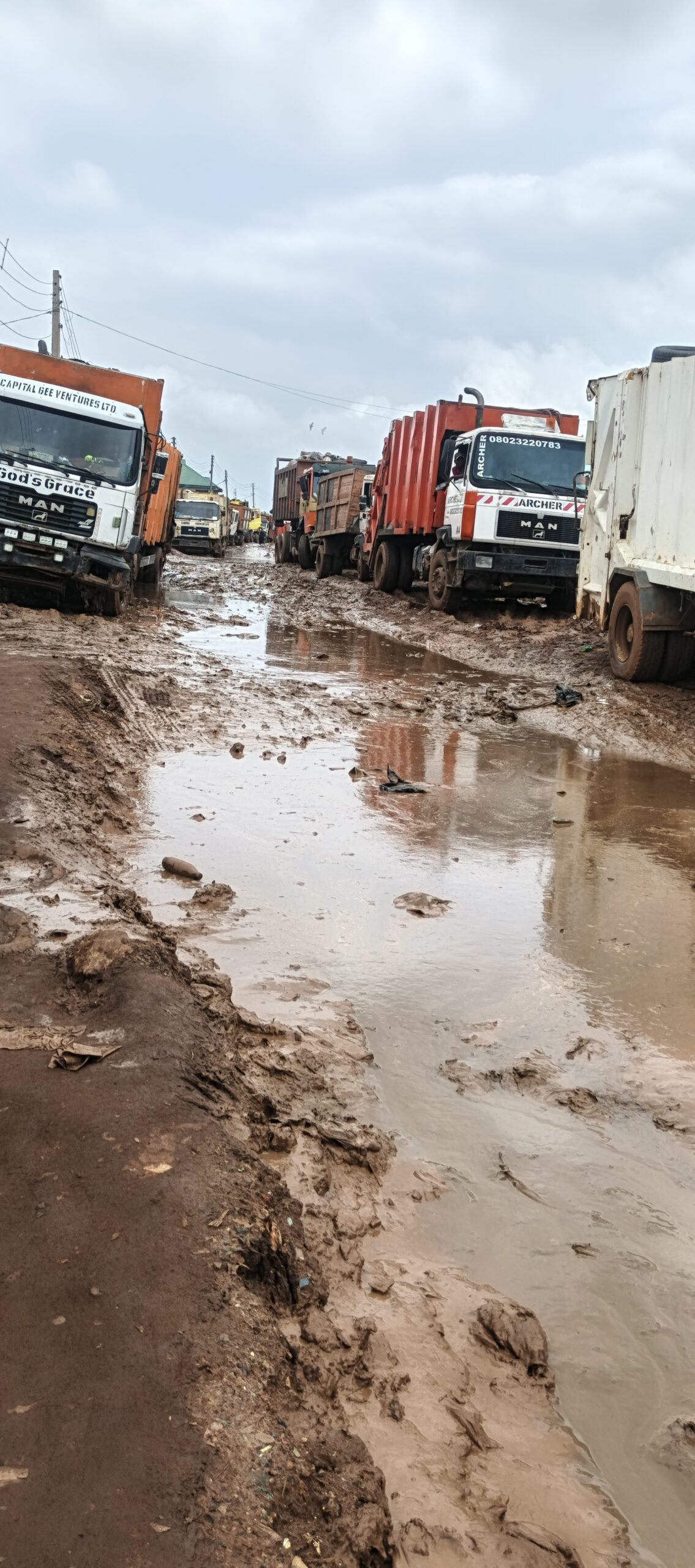
A visit by our correspondent to the facility on Friday, 26 June 2026, indicates a steady stream of refuse trucks making their way to the Ikorodu dumpsite.
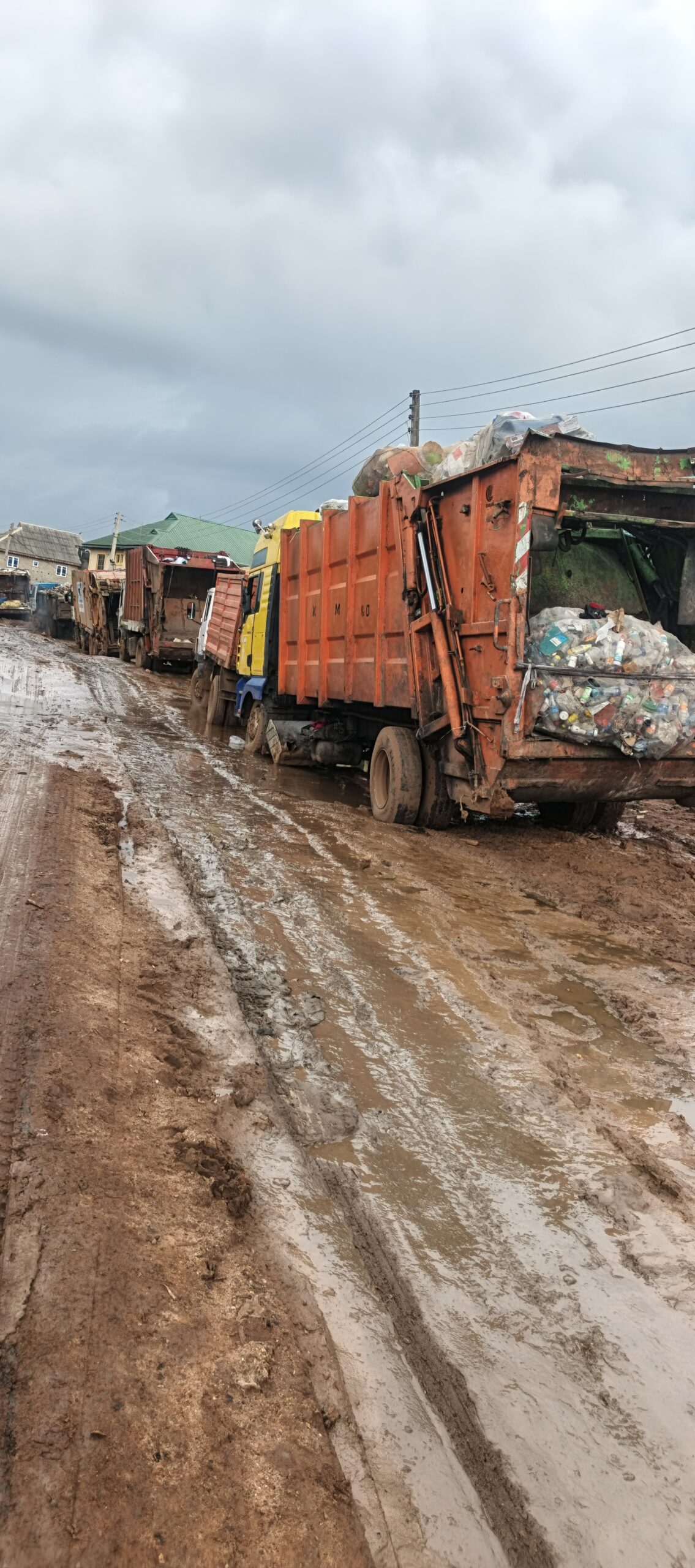
During this rainy season, heavy-duty vehicles navigate muddy roads while long queues occasionally extend towards the Igboken link road as trucks wait their turn to discharge waste.
Truck drivers who spoke with our correspondent attributed the delays to the orderly process of admitting vehicles into the dumpsite, which cannot contain more than one vehicle at a time.
One driver explained that trucks are attended to in batches rather than all at once, resulting in waiting periods that could last between two and three days during peak periods.
“In fact, some drivers that arrive later sometimes approach those of us already on the queue and ask if they can be allowed to offload before us, they went as far as tipping the officials to do this” the driver said, illustrating the pressure on the facility.
Although some earlier accounts suggested trucks waited much longer, further findings by our reporter revealed that most trucks spent between two and three days before gaining access to the disposal site.
Beyond these queues, residents linked their greater concern to the effect of the dumpsite on their environment.
According to them, smoke from waste disposal activities, offensive odour and deteriorating road conditions have become recurring complaints among residents, traders and motorists using the corridor.
Business owners told TransitNews NG that the poor condition of the road and leachate (the liquid that drains from refuse trucks and waste) pose serious health risks to residents, and also discourages customers from visiting the area, especially during the rainy season when sections become muddy and difficult to navigate.
Parents also expressed concern over the conditions schoolchildren endure while commuting through the area.
Some residents further alleged that runoff from the dumpsite has affected nearby water sources and called for measures to prevent environmental contamination.
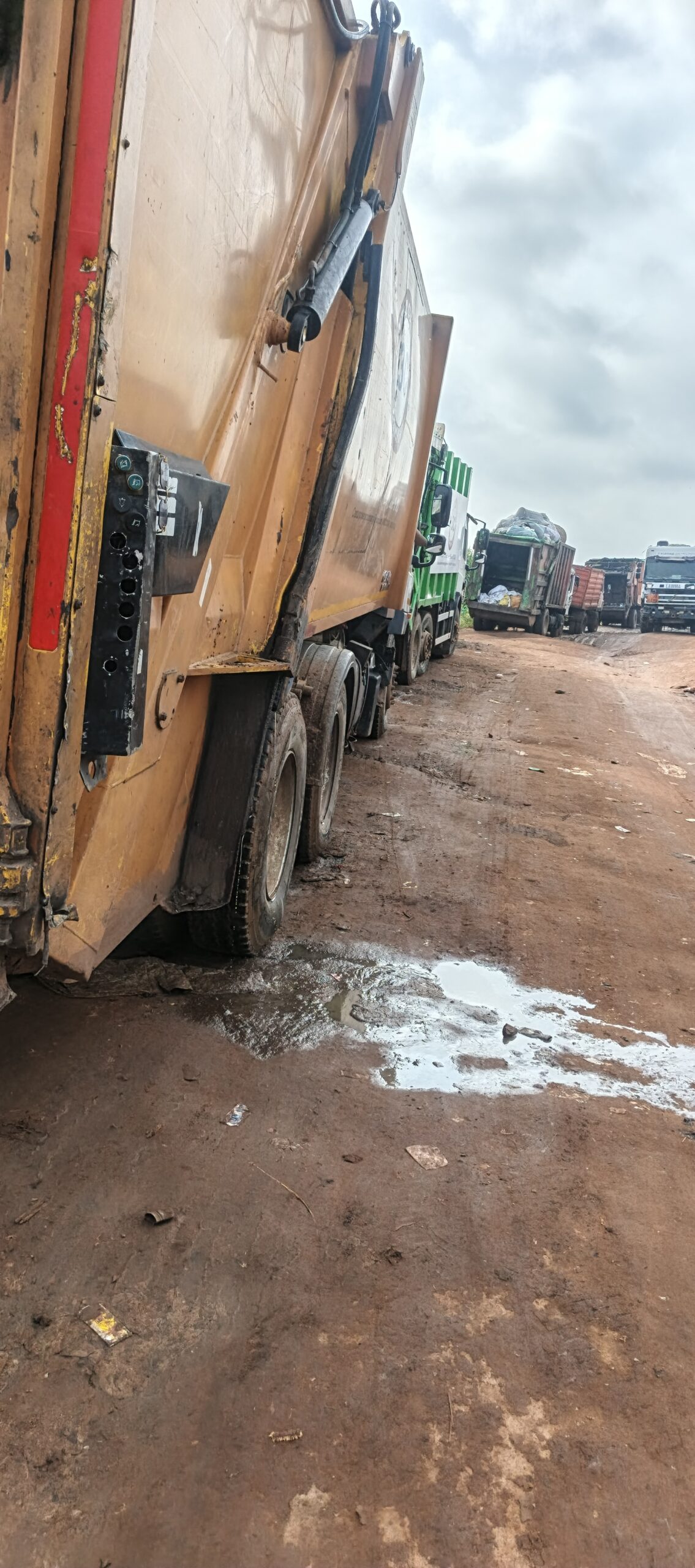
Speaking with TransitNews Ng, the Chairman of Progressive Community Development Association, Pa Adewebi posited that the challenges dated back more than a decade.
Recounting the community’s history, he said residents began developing the area around 2006 when it was largely undeveloped farmland.
According to him, the community formally established its own Community Development Association (CDA) in July 2010 after previously operating under the Igboken CDA.
Related Posts
He recalled that it was around the same period that refuse disposal activities began in the area.
“We bought our land from the Elenuwa family, while the land opposite belongs to the Elepe family. The major road separates both communities. The portion sold to LAWMA by the Elepe family used to be farmland where local farmers cultivated crops,” he narrated.
Since then, he noted, residents have continued to grapple with environmental challenges associated with the dumpsite.
Pa Adewebi said the community had held several meetings with representatives of LAWMA over the years, with varying degrees of success.
According to him, one of the most productive periods came when a former site manager, identified as Olumide, was overseeing operations.
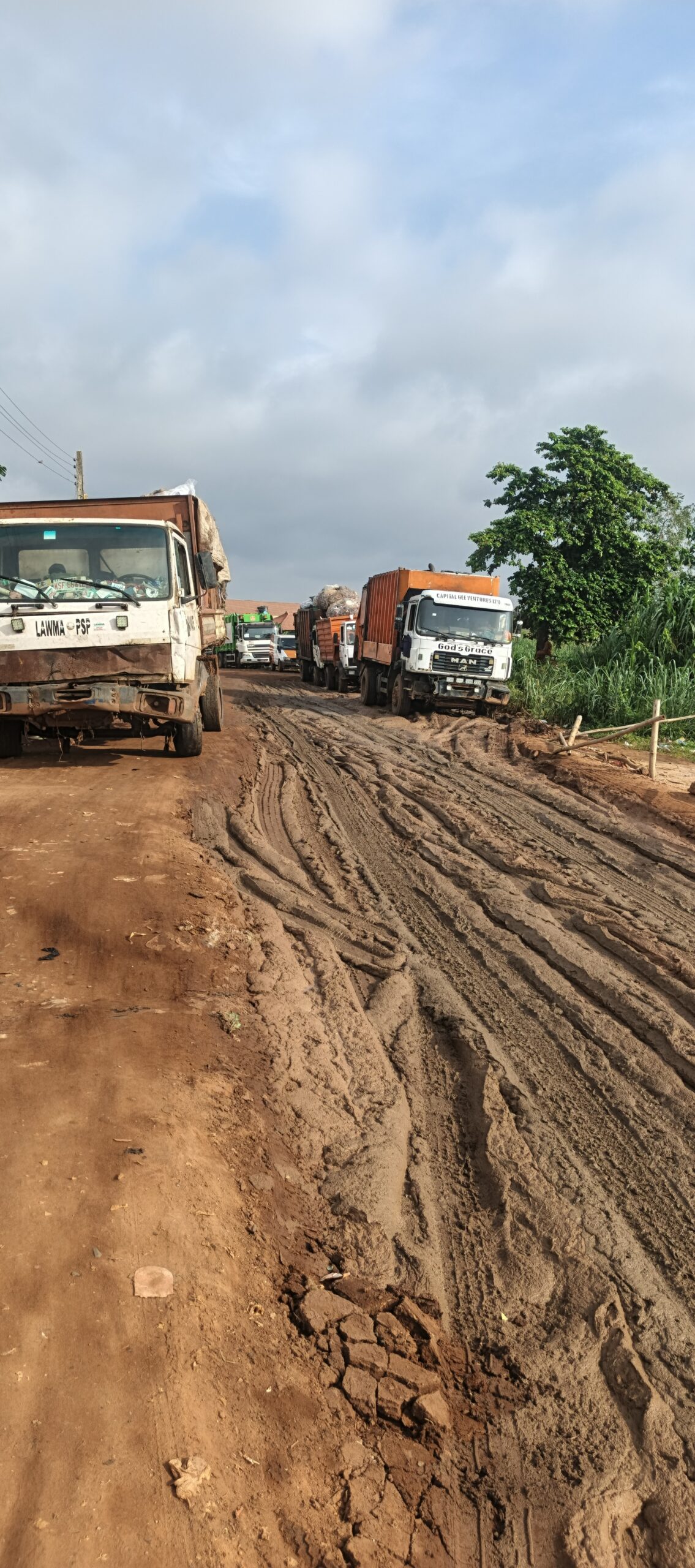
Trucks waiting turns to discharge waste at the facility
“Olumide responded to our concerns. He attended our meetings, helped construct drainage channels to divert erosion, ensured the area was fumigated regularly and even brought concrete rings for a culvert project before he was transferred,” he said.
He lamented that the momentum was lost after the official’s transfer.
“The culvert materials disappeared, and many of the promises made to the community have remained unfulfilled,” he added.
The community chairman disclosed that residents had at one point planned to stage a peaceful protest to draw the government’s attention to their concerns but suspended the action following assurances that intervention was imminent by LAWMA representatives at Dumpsite.
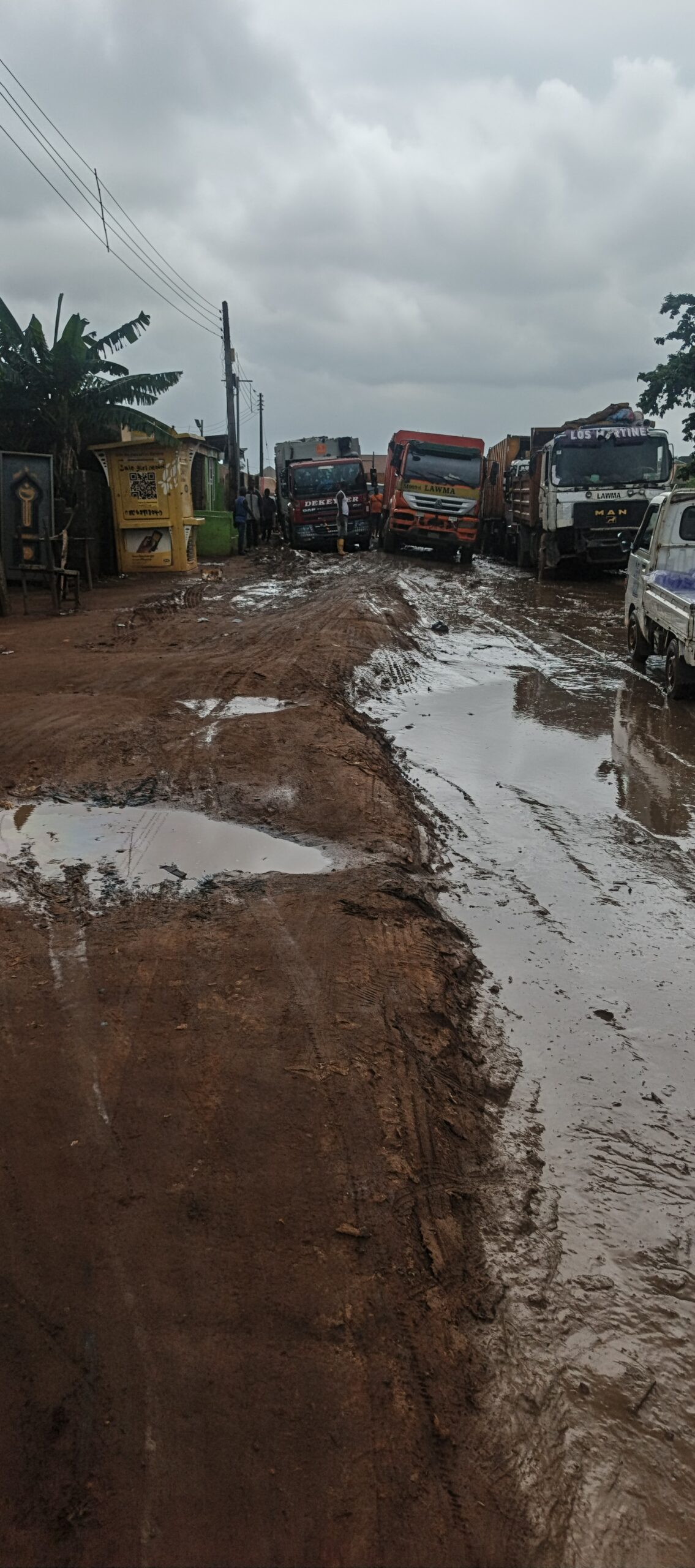 Another truck seen navigating the muddy road, making its way to the dumpsite.
“About two months ago, we wanted to protest with placards, but officials appealed to us to exercise patience. We are still waiting because what we are asking for is not too much. We need a good road, regular fumigation, proper management of medical waste and protection of our environment because people live here,” he bemoaned.
Pa Adewebi added that if residents had known the scale of the environmental impact that would accompany the dumpsite, many might have reconsidered investing in property within the community.
However, further findings by our correspondent indicated that LAWMA is not unaware of the community’s concerns, as sources familiar with discussions between the agency and residents disclosed that plans are underway to implement palliative measures aimed at easing movement around the dumpsite during the rainy season.
The proposed intervention is expected to include the deployment of laterite and hardcore materials to improve the condition of the access road and reduce the build-up of trucks extending towards the Igboken Link Road.
The agency is also said to be considering renewed fumigation of the surrounding area as part of efforts to address residents’ environmental concerns.
Sources further explained that comprehensive road rehabilitation may have to wait until the rains subside, as construction activities would be difficult under current weather conditions.
Meanwhile, residents expressed cautious optimism over the proposed intervention, saying they hope the promised measures will materialise during the August break.
As Lagos continues to expand, so too does the challenge of managing the enormous volume of waste generated daily.
The Ikorodu experience highlights the delicate balance between maintaining an efficient waste management system and protecting the communities that host essential public infrastructure.
For residents of the UNILAG/Museum Estate axis, (especially the Progressive Estate residents) the issue is not opposition to waste disposal operations.
Rather, they seek improved infrastructure, regular environmental maintenance and sustained engagement with authorities to ensure that the burden of keeping Lagos clean does not come at the expense of the health and well-being of host communities.
Whether the planned palliative measures will provide lasting relief remains to be seen. For now, residents, traders and truck operators alike are looking ahead to the promised interventions, hopeful that they will mark the beginning of a more sustainable relationship between the community and one of Lagos’ most important waste disposal facilities.
At the time of publication, LAWMA had not provided an official response to the specific issues raised in this report, although an official contacted by TransitNews NG said the questions had been forwarded to the appropriate department.