

FIEO Seeks Easier Market Access as India-Nigeria Trade Hits $9bn
ZAINAB JUNAID
The Federation of Indian Export Organisations (FIEO), has expressed interest in expanding the market for Indian products into Nigeria, with opportunities for joint ventures, distribution arrangements and potential local manufacturing partnerships.
Represented by 20-member delegation, FIEO informed that the visit to Nigeria followed an earlier business engagement with Ghana, a move aimed at exploring commercial opportunities in the country.
The Federation of Indian Export Organisation was set up by Ministry of Commerce and Government of India in the 1965 to act as a unified apex body for coordinating, promoting, and boosting India’s international trade.
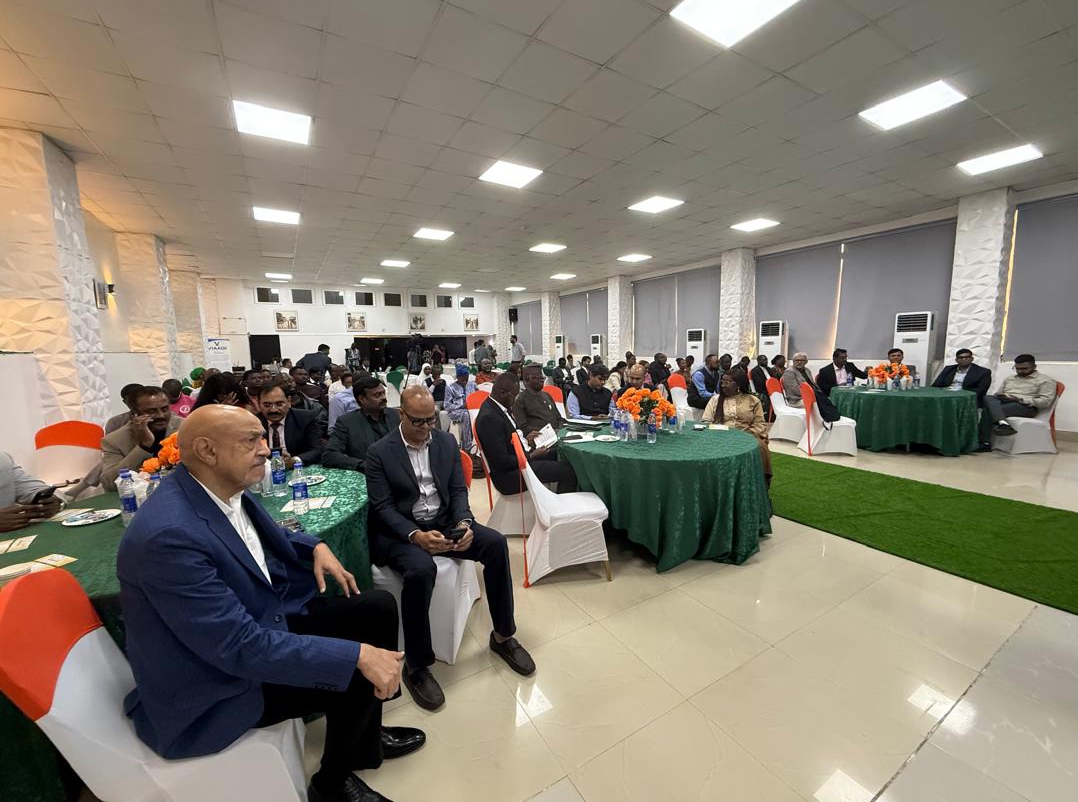
Speaking on the sidelines of the India–Nigeria Business Forum held at the Lagos Chamber of Commerce and Industry (LCCI) in Victoria Island on Thursday, 8 October 2026, the Joint Director of FIEO, Manish Sharma, stressed that the initiative was to establish commercial relationship with Nigerian businesses.
Manish listed participating companies to include textiles, pharmaceuticals, steel, food and agriculture, engineering, healthcare, among others.
To him, the immediate objective is to sell Indian products in Nigeria, while exploring for joint ventures, distribution partnships and possible manufacturing arrangement.
“So I hope some Nigerian businessmen will find time to interact with the Indian companies. Since we know that the global trade between India and Nigeria is reaching about $9bn, we hope something good will come up,” he stated.
On proposed five plus five policy validity arrangement under which companies can import products for five year and later have manufacturing facility here in Nigeria, Manish said more awareness on this policy will give India firms the room to consider Nigeria as a potential destination for long term manufacturing investment.
He described Nigeria as an emerging market which offers opportunities for India businesses, saying participating companies were interested in exploring the country’s commercial potential across all sectors.
The FIEO Joint Director also advocated more business programmes that will promote direct engagement between companies in Nigeria and India, describing bilateral trade as encouraging for both countries.
Related Posts
In his welcome address, the President/ Chairman of Council, Lagos Chamber of Commerce and Industry, Engr. Leye Kupoluyi, acknowledged India as Nigeria’s largest export market with its enterprises listed among the country’s largest private employers, but stressed that the bilateral partnership is performing below its potential.
Kupoluyi said India’s investment in Nigeria is estimated to about US$27 billion, with more than 200 companies employing close to 100,000 Nigerians in telecommunications, pharmaceuticals, power, automobiles, consumer goods, and construction.
He stressed that with this development, Nigeria need to position itself as India’s Atlantic production base and gateway to the African Continental Free Trade Area.
To him, the India–Nigeria Joint Trade Committee last met in April 2024, and the Nigeria–India Business Council, inaugurated in 2022, is expected expected to play a greater role in strengthening the bilateral relationship between the two countries. “India and Nigeria do not lack goodwill, markets, or capital. What has been missing is a shared set of targets and a mechanism to deliver them, and this Forum has now provided both”.
The LCCI President cited the bilateral meeting between Nigeria and India on the sidelines of the just-concluded BRICS Leaders’ Summit in New Delhi, Nigeria’s speech seeking investment inflows at the just-concluded United Nations General Assembly in New York, and many other international engagements as evidence of the country’s efforts in attracting foreign investment.
He also disclosed that the bilateral trade between both countries recovered to about $9bn in 2025-2026 financial year after declining from $14.95bn in the 2021–2022 to $7.13bn in 2024–2025, largely due to reduced Indian purchases of Nigerian crude. The figures, he said, were disclosed by the Indian High Commissioner to Nigeria.
He urged Indian businesses to consider sectors such as pharmaceuticals, defence, digital technology, and the creative industries, stressing that investment in these areas will create more jobs, transfer skills, and open opportunities for the country’s large youth population.
“Nigeria is particularly interested in moving our relationship with India beyond the traditional exchange of commodities towards investments that support domestic production and value addition”.
He stressed that stronger private-sector engagement is central to the next phase of Nigeria-India relations, particularly in industries where Indian companies have considerable expertise and Nigerian demand remains strong.
“With more than 1.6 billion people between us, India and Nigeria can surpass their previous trade peak on stronger foundations by diversifying trade, balancing investment, and modernizing how we pay each other,” Kupoluyi maintained.