

NCS Data Signals Trade Boom as Nigeria’s Exports Soar 135.83% in Q1 2026
Manufactured Goods Drive Trade Growth

ZAINAB JUNAID
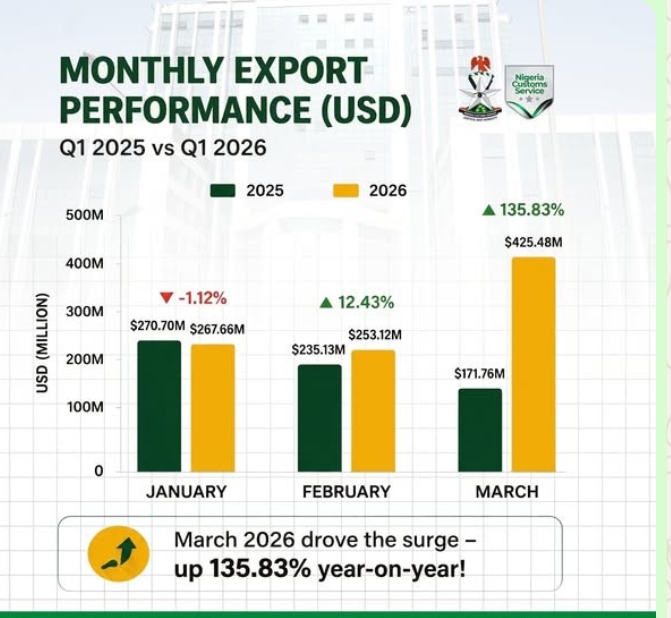
Nigeria recorded a sharp increase in export activity in the first quarter of 2026, with total export performance rising by 135.83 percent year-on-year, according to figures from the Nigeria Customs Service (NCS).
This feat was largely driven by a surge in March, which lifted overall quarterly performance and signalled renewed momentum in the country’s external trade.
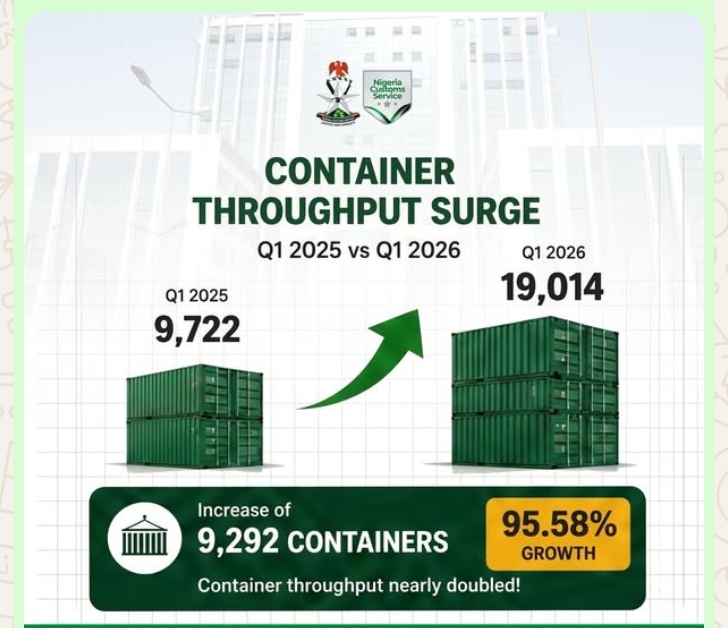
The trade activity was further reflected in cargo movement across the nation’s ports, where container throughput rose significantly within the review period.
Data released by NCS shows that total containers handled increased from 9,722 in Q1 2025 to 19,014 in Q1 2026, representing a 95.58 percent increase, that is an increase of 9, 292 containers.
The near doubling of container traffic signals increased shipment volumes and improved flow of goods through Nigeria’s trade corridors.
Similarly, a closer look at export categories reveals a changing pattern in the country’s trade composition.
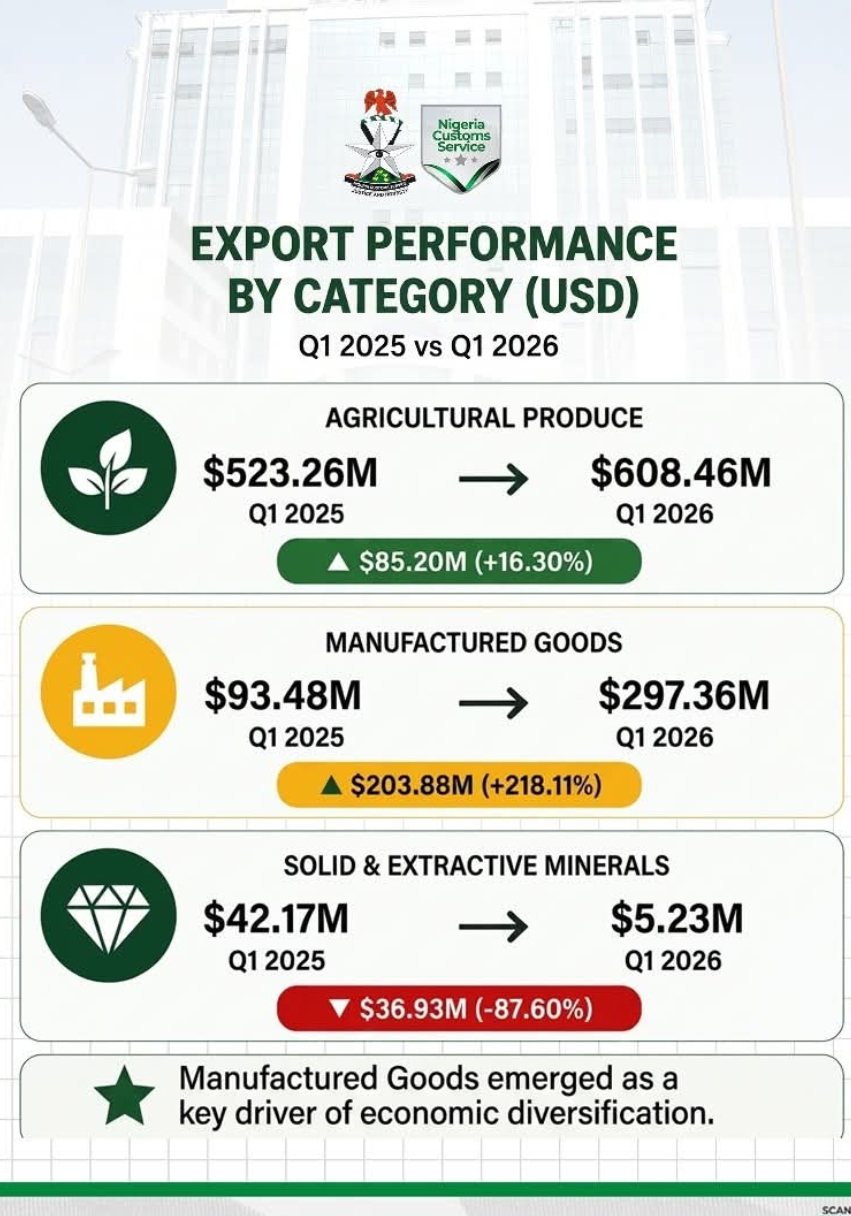
Exports of manufactured goods recorded the most significant growth, rising from $93.48 million in Q1 2025 to $297.36 million in Q1 2026, an increase of over 200 percent, that is $203.88 million.
This marks a notable expansion in value-added exports and suggests improving industrial output.
Related Posts
Also, Agricultural produce had a moderate growth, increasing from $523.26 million to approximately $608 million ($608.46M), reflecting a 16.30 percent rise (85.20M) and maintaining the sector’s role as a consistent contributor to export earnings.
However, the performance of solid and extractive minerals declined from $42.17 million in Q1 2025 to $5.23 million in Q1 2026, representing a decrease of $36.93 million. This shows a constraint in that segment, according to the data released by the Lilypond export Command.
Economic Outlook
The latest figures suggest that Nigeria’s export trade is gradually shifting, with stronger contributions coming from manufacturing and agriculture rather than reliance on raw commodity exports.
Rising manufactured exports indicate progress in local production capacity and value addition, while increased cargo throughput suggests that trade infrastructure and logistics systems are supporting higher volumes of economic activity.
At the same time, the weak performance of extractive exports underscores the need for renewed focus on improving productivity and addressing structural issues in that sector.
Conclusion
In view of the afore mentioned, the data points to an economy that is beginning to diversify its export earnings, with early signs of reduced dependence on traditional commodities.
If the current trajectory is sustained, it could enhance Nigeria’s trade resilience, support foreign exchange inflows, and create a more balanced export structure.
Sustaining this progress, however, will depend on continued investment in industry, efficient port operations, and policies that encourage value-added production.