

NSW Must Go Beyond Technology or Risk Failure, Stakeholders Warn
..As Dr. Segun Musa Outlines Seven Critical Pillars for Successful Implementation.
ZAINAB JUNAID
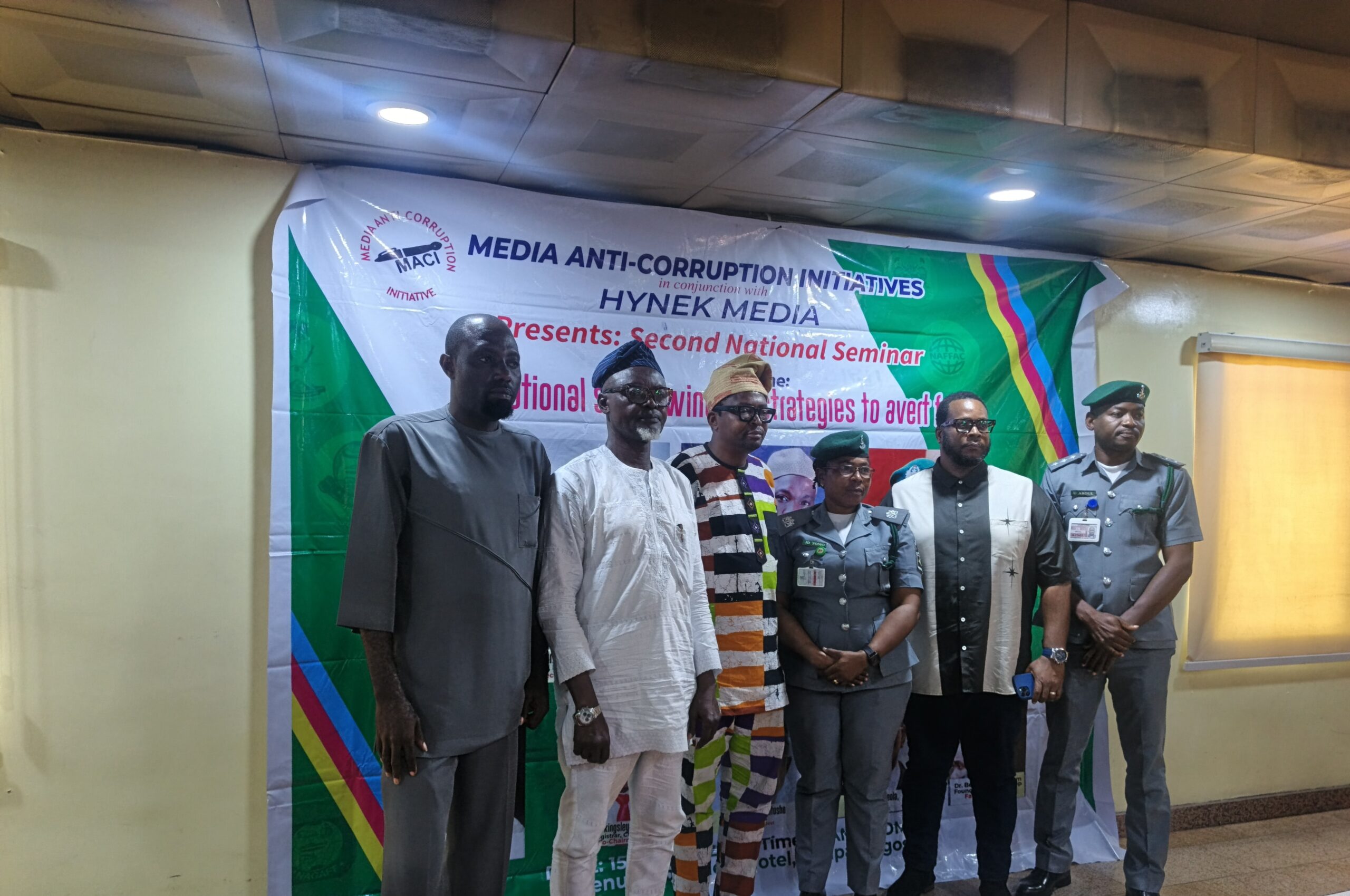
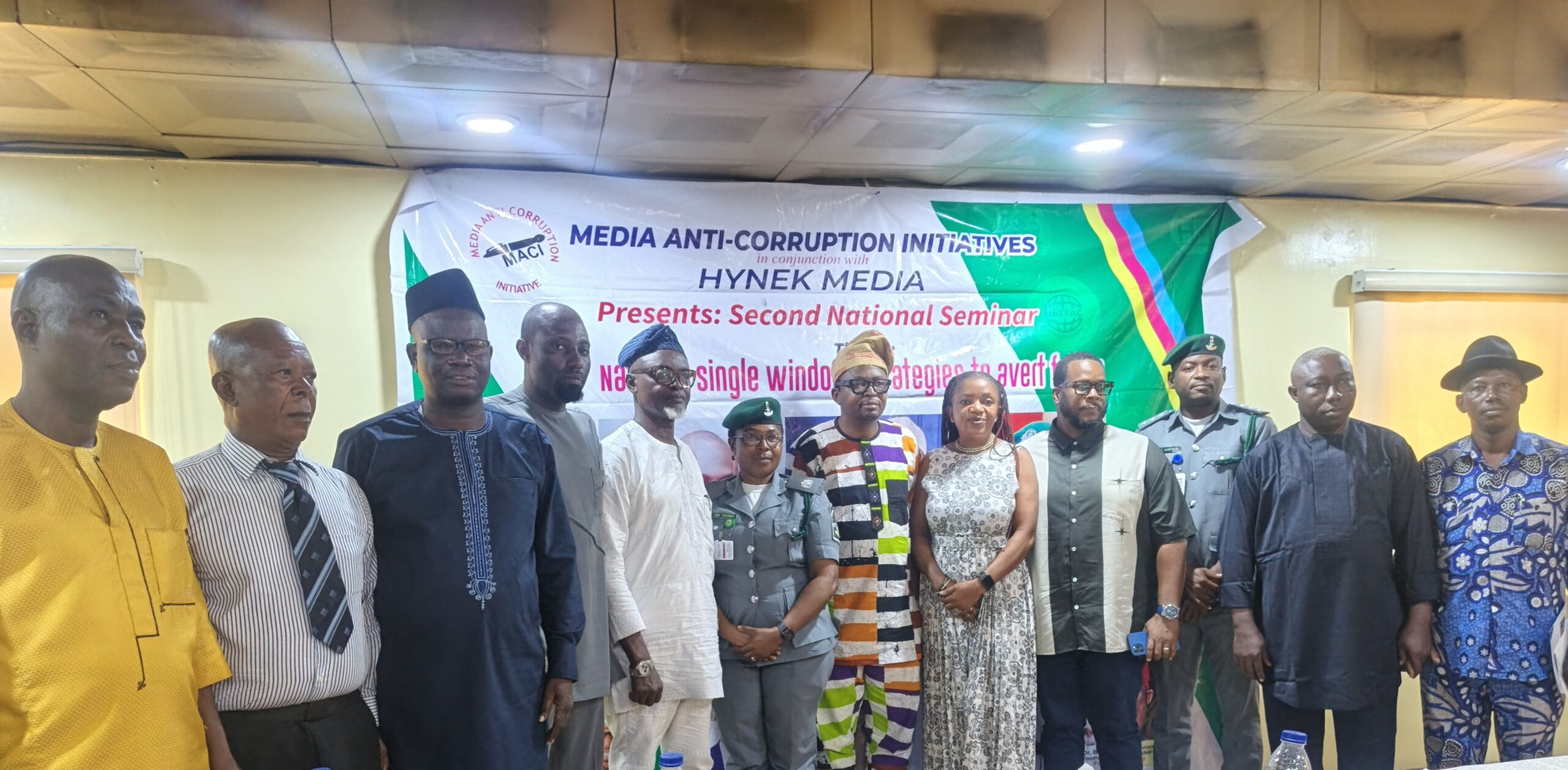
Stakeholders at the second national seminar organised by Media Anti-Corruption Initiatives (MACI) in conjunction with Hynek Media on Wednesday, 15 April 2026, in Lagos, have warned that successful implementation of the National Single Window (NSW) will depend on transparency, institutional coordination, and strong execution, rather than technology alone.
They urged port users to embrace the initiative with determination, aimed at mitigating the difficulties experienced in cargo declarations and other operational glitches.
Speaking on the theme, “National Single Window: Strategies to Avert Failure”, the Chairman/CEO of Widescope International Group, Dr. Oluwasegun Musa, described the reform as a “watershed moment” capable of unlocking billions in trade and investment if properly implemented.
He, however, cautioned that the initiative risks failure if treated merely as an IT project rather than a comprehensive economic reform.
Dr. Musa who was represented by Engr. Onoroisa Mark Onuchi at the event, stated that global evidence depicts countries with efficient trade systems record up to 15 per cent higher exports and 10 per cent more foreign direct investment, stressing Nigeria must avoid the pitfalls that have undermined similar reforms.
He cited examples of countries such as Singapore, South Korea, Sweden, United States of America, Kenya and Mauritius, saying their success was driven by strong political will, institutional alignment, and sustained capacity building.
“Singapore, for instance, did not merely digitise existing processes; it re-engineered them, reducing multiple paper forms into a single electronic platform,” he said.
“A holistic reform is required to aggressively champion the needed impact if Nigeria must succeed, and to avert failure, we must master the fundamentals”
The guest speaker further outlined seven key measures required to avert failure, beginning with capacity building, which he described as critical to effective implementation.
According to Dr. Musa, trade facilitation literature shows inadequate training underlines the majority of failed implementations (UNCTAD, 2022). “Customs officials, port managers and other key personnel need in-depth, hands-on workshops on the new system’s functions”.
He stressed that inadequate capacity has contributed to the collapse of several trade facilitation initiatives globally.
He also emphasised the need for a holistic policy framework, warning that without proper alignment among agencies regulating customs, ports, health, and the environment, existing bottlenecks would persist.
On infrastructure, Musa maintained that readiness is non-negotiable.
Related Posts
He pointed out that deficiencies in roads, ports, power supply, and connectivity continue to impose heavy economic costs.
“In Africa, fragmented road and logistics networks already impose a heavy toll – on the order of ~2% of GDP annually. Nigeria loses a significant portion of potential growth to bottlenecks at ports, roads, and power supply. We must parallel NSW software with physical upgrades: reliable broadband at every border checkpoint, 24/7 electricity at processing centers, and sufficient warehousing at ports”.
Dr. Musa advocated end-to-end automation and interoperability, explaining that the NSW must integrate seamlessly with financial institutions, shipping lines, and regulatory agencies to reduce cargo clearance timelines.
He also highlighted the importance of establishing efficient dispute resolution mechanisms, noting that unresolved trade issues could disrupt the system.
The industry expert equally called for strong compliance and enforcement frameworks, including audit trails and monitoring systems, to deter abuse and enhance transparency.
Musa underscored the value of data-driven decision-making, explaining that the NSW would generate critical intelligence to detect revenue leakages, improve planning, and strengthen national security.
He further urged the government to ensure the platform operates as a true one-stop shop, where all trade documentation is processed through a single interface, while emphasising the need for active private sector participation.
Similarly, Superintendent of Customs, SC JD Tomo, Public Relations Officer, Lagos Industrial Area Command of the Nigeria Customs Service (NCS) underscored the importance of eliminating duplication of processes, reducing human interface and sustaining confidence in the success of the National Single Window (NSW) initiative.
She clarified the distinction between the National Single Window and the B’Odogwu platform, noting that B’Odogwu, an indigenous Customs platform designed to enhance revenue generation, is not intended to duplicate processes. Rather, the NSW is an integrated system that brings all relevant agencies onto a single interface, enabling them to perform their functions concurrently for optimal efficiency and results.
Also, in their goodwill messages, other stakeholders at the seminar emphasised the need for transparency, accountability, and seamless inter-agency collaboration in the implementation of the National Single Window.
They noted that while the initiative holds significant potential to streamline trade processes and boost revenue generation, its success will depend on effective coordination among government agencies and sustained stakeholder engagement.
The event was also graced by other stakeholders including representatives from Truck Transit park, Freight forwarders, and Maritime Journalists.