

NPA’s Electronic Call-Up System Remains Operational After Contract Expiration- Says AMATO
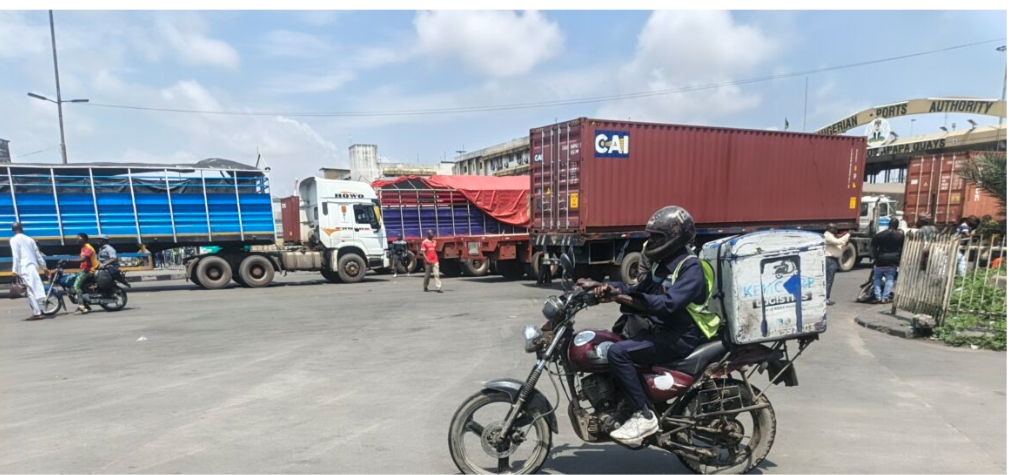
ZAINAB JUNAID
The National Secretary of the Association of Maritime Truck Owners (AMATO), Sanni Bala Muhammed has said that the Electronic Call-up System (ETO) introduced by the Nigerian Port Authority (NPA) remains operational despite its February 2026 contract expiration.
In a telephone chat with TransitNews Ng on Tuesday, 10 February 2026, Sanni noted that the system is still active, easing cargo evacuation, reducing traffic congestion, and enhancing port operations.
He viewed the app as a significant improvement that brought transparency and order to truck movements within the ports.
Recall that the 5-year concession for the Eto electronic call-up system, managed by Truck Transit Parks (TTP) Limited for the Nigerian Ports Authority (NPA), expired in February 2026 and as of early March 2026, Transit NewsNG gathered that the contract is undergoing a review by the Authority, with operations continuing without immediate disruption.
According to Sanni, “The Eto call up operation has been sustaining seamless uninterrupted ports truck access operations since the expiration date. Any slight suspension of the call up operations would induce traffic anarchy and port congestion. The call up operation is still very active and will continue to be active until further notice”.
He highlighted the impact of the app since its inception, stating the call-up technology has significantly eliminated traffic anarchy in Apapa and TinCan corridors.
“There is free flow of traffic to and from the ports without obstruction to businesses and residential activities in Apapa and Tincan. People can easily predict when they will leave or come to the ports,” he said.
Related Posts
On whether the old manual call up system should be embraced, Sanni posited that the roads cannot cope with the capacity of daily vehicular movements into the ports, hence, the need for a call up system to manage the movement of trucks into the ports in systematic and electronically organized manner to prevent the chaos, lawlessness and road blockade associated with manual system of sending trucks to the ports.
He expressed satisfaction in the system stressing it’s more than an app but a game changer and a landmark achievement in the history of Nigeria’s maritime logistics.
“It has ushered in a new era of automation, transparency, and efficiency in port access and truck scheduling, resolving the long-standing chaos and gridlock that plagued the Apapa and TinCan Island logistics corridors for decades,” he said, “Today, truckers can book port access slots remotely and affordably, from anywhere in the world, without the need to physically queue for days on end or engage with road cabals for access tags that used to cost between ₦250,000 and ₦300,000, often without any certainty of progress. The Eto system, at a flat rate of ₦21,500, has eliminated the extortion and exploitation that defined the manual era”.
He said the system brought transformational impact expected of a meaningful reform.
Sanni however, appealed to the Nigeria Port Authority to further consolidate the gains acquired from the app by eliminating all forms of extortion checkpoints, deploying electronic tags (e-tags) to permanently end racketeering, Incorporating a Manifest Scheduler System, and enhancing terminal efficiency.
He stressed further that some individuals are sponsoring a campaign of calumny against the Eto system, largely beneficiaries of the discredited manual system.
“Their interest lies in reversing the clock to a time when truckers were extorted and exploited under the guise of port access facilitation.
“We urge all members of the trucking community to remain vigilant. The call-up automation is here to stay, and we must resist all attempts to undermine the progress it represents. The manual call-up system is dead and buried, and any nostalgia for that era must give way to the reality of sustainable, tech-driven port logistics,” Sanni emphasised.