

PortNews @30: A Journey of No Regrets
ZAINAB JUNAID
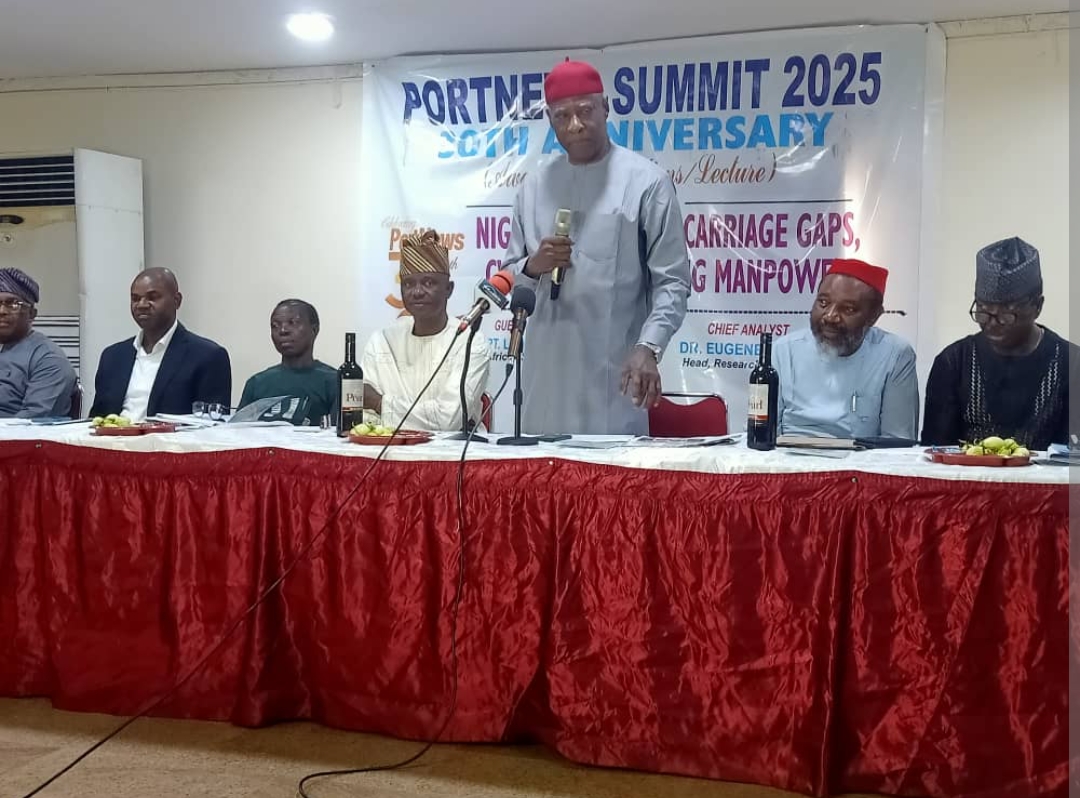
The Publisher of PortNews, Mr Wale Oni marked the 30th anniversary of his publication in a celebratory event, highlighting the publication’s milestones and reflecting on Nigeria’s maritime industry past glory, its current Challenges and the need for change.
Speaking at the commemorative ceremony in Lagos on Thursday, 6 November 2025, Mr Oni expressed gratitude for the impressive turnout of guests including families and well-wishers, acknowledging key Stakeholders in the industry like late Alhaji Sanni Shittu, Prince Olayiwola Shittu, Dr Taiwo Afolabi, Captain Emmanuel Ihenacho, Comptroller General of Customs Adewale Adeniyi MFR PhD, among others for their contributions to the success of the paper.
He also described the occasion as epoch making event, underscoring the impact it had on the stakeholders, industry, and Nigeria as a whole.
To him, the 30-year journey and the support from the key Stakeholders have created a genre of maritime journalism that has provided job opportunities for hundreds of Nigerians.
In his words, “Honestly I started with not believing that it would survive, because I have worked in the first maritime newspaper, Freight Monitor, and it packed up after ten months. I became jobless but not hopeless. I had this little change that my friend Ikechukwu Jibuno discovered that could print one edition. We went to vanguard newspaper printing press and printed the very first edition of Port News on 6th of November 1995.…
While speaking on the influence of the industry to the Country, he noted that the maritime sector plays a crucial role for Nigeria’s economic stability, having a feature of consistent revenue generation.
Mr Oni stressed that Nigeria’s maritime industry has a unique trait, a characteristic peculiar only to it. “It has never witnessed or been grounded by Nigeria’s many recorded economic crises. On the contrary, it is this sector that is the buffer, the saving grace that always bail Nigeria out. Check through industry records. At what time, in what year did the Nigeria Customs Service, Nigerian Ports Authority and the Nigerian Maritime Administration and Safety Agency not meet revenue targets?” he questioned.
However, despite its positive features, the industry is not without its lapses, according to the organiser, at the zenith of the sector’s glory, the Nigerian National Shipping Line paraded about thirty ocean going vessels with brilliant and respected master mariners like Captain Iheanacho at the helm. These individuals were good and shining ambassadors of Nigeria, hoping for a future full of promise.
“Ironically, this only lasted from the pre oil boom years of the 60s through the 79s up to the 80s. But where are we today? Despite the survival stamina of our industry, the NNSL and all its vessel have gone under. Where are the hundreds of super trained staff of NNSL and other crew of MV Kudirat Abiola, MV Binta Yaradua? We all remember the fate of MV Abuja.
Related Posts
“Nigeria is a nation blessed with abundantly human endorsement. We must not be seen as the biggest black nation for the fun of it, we must claim it and live it up with demostrations….
“…..The CVFF primarily provides funds for indigenous ship owners for medium size coastal vessels acquisition and maintenance. The fund was to be sourced through two percent surcharge and other levies…Between 2003, it is being mouthed that about 800 million dollars has been realized into the CVFF purse. Some rumour it to be one billion dollars… Why can’t government tell us the exact amount? Why this level of opaqueness”.
Mr Oni also bemoaned the non- productivity of such a humongous volume of public money, especially in recent time that virtually all the indigenous companies in coastal carriage business have gone under.
He said, “Ask Chief Jolapamo, ask Otunba Sola Adewunmi of Nigeria Indigenous Ship Owners Association, NISA. Let us imagine the volumes of cargo and the revenue being lost to smart foreigners in the West Coast. I admit that a few upstarts have taken advantage of Dangote Refinery and big time tank farms. But on a scrutiny, are they really in charge? Must we continue playing second fiddle even to our West African brothers in this trade.
“Why would a nation deem it wise to save about 800 million dollars for so Iong without finding it expedient to dispense it for the purpose It was generated. When thousands of its skilled seamen, master mariners, professionals trained at exorbitant costs in the best shipping schools around the world are loafing around, wasting away….”
….We cannot continue to shoot ourselves in the foot, we have a huge population to cater for, we need to tap and exploit every options that can enrich us as a nation,”.
He concluded calling for a thriving cabotage regime that will ensure Nigeria do not only leads the line in West Africa waters and generate revenue, but also create multiple employment opportunities for the youths.

The epoch-making event themed: Nigeria’s Shipping Carriage Gaps, CVFF and the Fading Manpower, was a well planned session as it featured key Stakeholders who delivered lectures in turns and presented awards to veteran journalists including Mr. Funsho Olojo for impactful journalism, and several stakeholders for their contributions to the industry’s development and paper’s growth.